2.5.1 Meaning and significance of consumer surplus
Definition: Consumer surplus is the difference between the maximum price a consumer is willing to pay for a good and the price actually paid.
On a diagram it is the area below the demand curve and above the equilibrium price. It measures the welfare (benefit) consumers gain from a market. Example: if a consumer is willing to pay $10 for a bag of oranges and the market price is $8, consumer surplus is $2. At a rising price the consumer surplus triangle shrinks; at a falling price it grows. Calculation: CS = ½ × (maximum willingness to pay – price) × quantity.
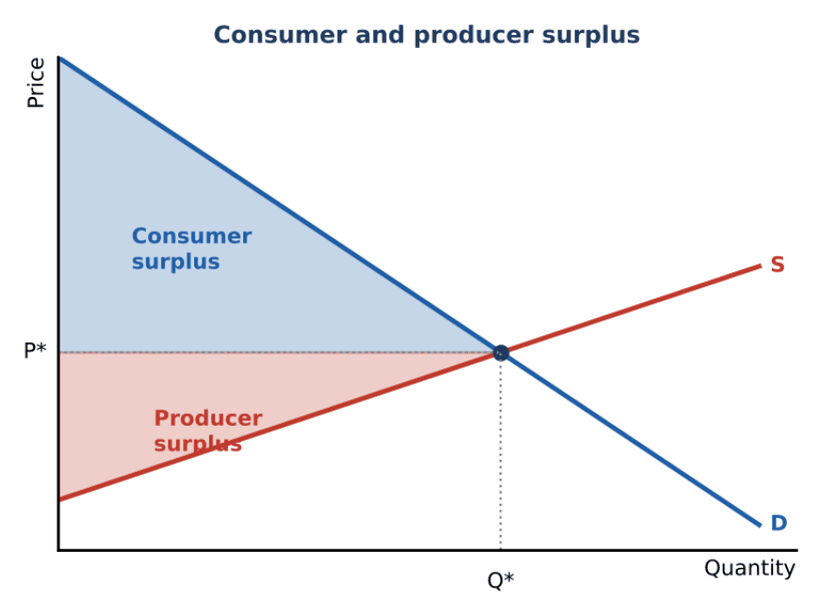
Figure: Consumer and producer surplus
Example: If a student would pay ₹500 for a concert ticket but buys it for ₹300, their consumer surplus is ₹200.
Analysis chain (AO2): Demand curve shows willingness to pay → consumers pay only the market price → the area between the demand curve and price is the extra benefit (consumer surplus).
🔒 Also in the full notes
- 2.5.2 Meaning and significance of producer surplus
- 2.5.3 Causes of changes in consumer and producer surplus
- 2.5.4 Significance of PED and PES in determining the extent of changes in surplus
- Exam practice: 5 practice questions
- 2 exemplar answers with full model answers and mark breakdowns