Level: SL and HL. Sections marked HL only are for Higher Level students.
Elasticity measures how strongly one variable responds to a change in another. Firms use it to set prices; governments use it to design taxes.
2.5.1 The concept of elasticity
Definition
Elasticity is a measure of how responsive one variable is to a change in another variable. It is calculated as a ratio of percentage changes, so it has no units.
Elasticity is a measure of how responsive one variable is to a change in another variable. It is calculated as a ratio of percentage changes, so it has no units.
Demand is elastic when quantity demanded responds strongly to a change in another variable, and inelastic when it responds weakly.
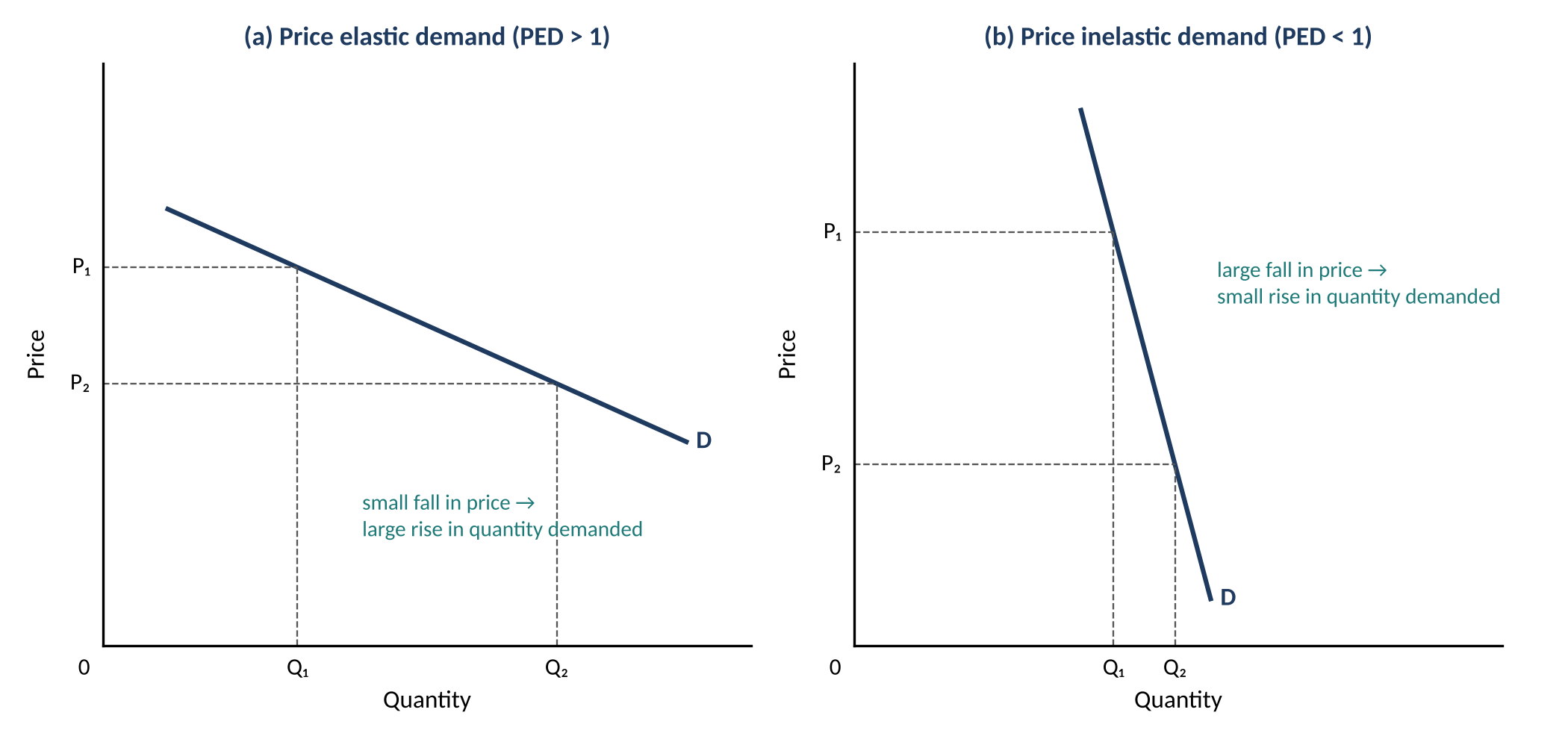
Figure 1: (a) relatively price elastic and (b) relatively price inelastic demand
🔒 Also in the full notes
- 2.5.2 Price elasticity of demand (PED)
- 2.5.3 Changing PED along a straight-line demand curve (HL only)
- 2.5.4 Determinants of PED
- 2.5.5 PED and total revenue
- 2.5.6 Importance of PED for firms and governments
- 2.5.7 Income elasticity of demand (YED)
- Exam practice: 6 questions with mark allocations
- 3 exemplar answers with full model answers and examiner commentary