Level: SL and HL
Product, price, promotion and place — plus people, processes and physical evidence for services: seven decisions that must tell one consistent story to one target customer.
Guiding question
Why does a marketing mix that works brilliantly for one product fail completely for another?
- I can explain the product life cycle, the product portfolio, extension strategies, and the links between the life cycle, investment, profit and cash flow
- I can explain the aspects and importance of branding
- I can evaluate pricing methods, including (HL) dynamic, competitive and contribution pricing and price elasticity of demand
- I can explain above, below and through the line promotion and evaluate social media marketing
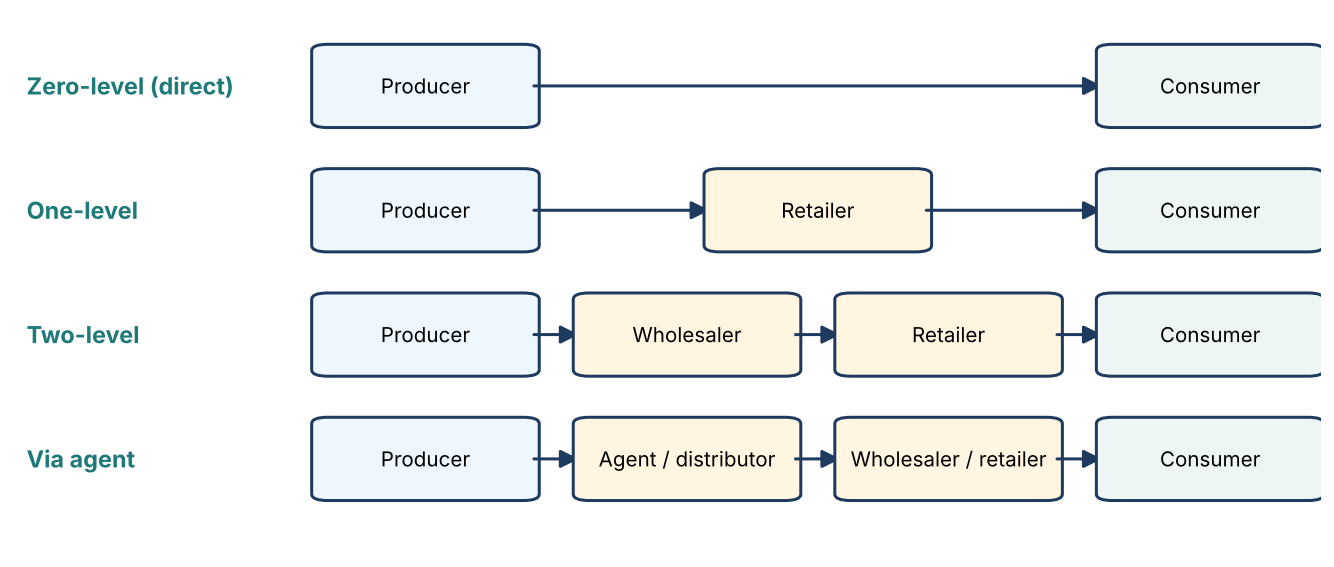
- I can evaluate distribution channels and the roles of people, processes and physical evidence in marketing a service
- I can recommend an appropriate marketing mix for a given product or business
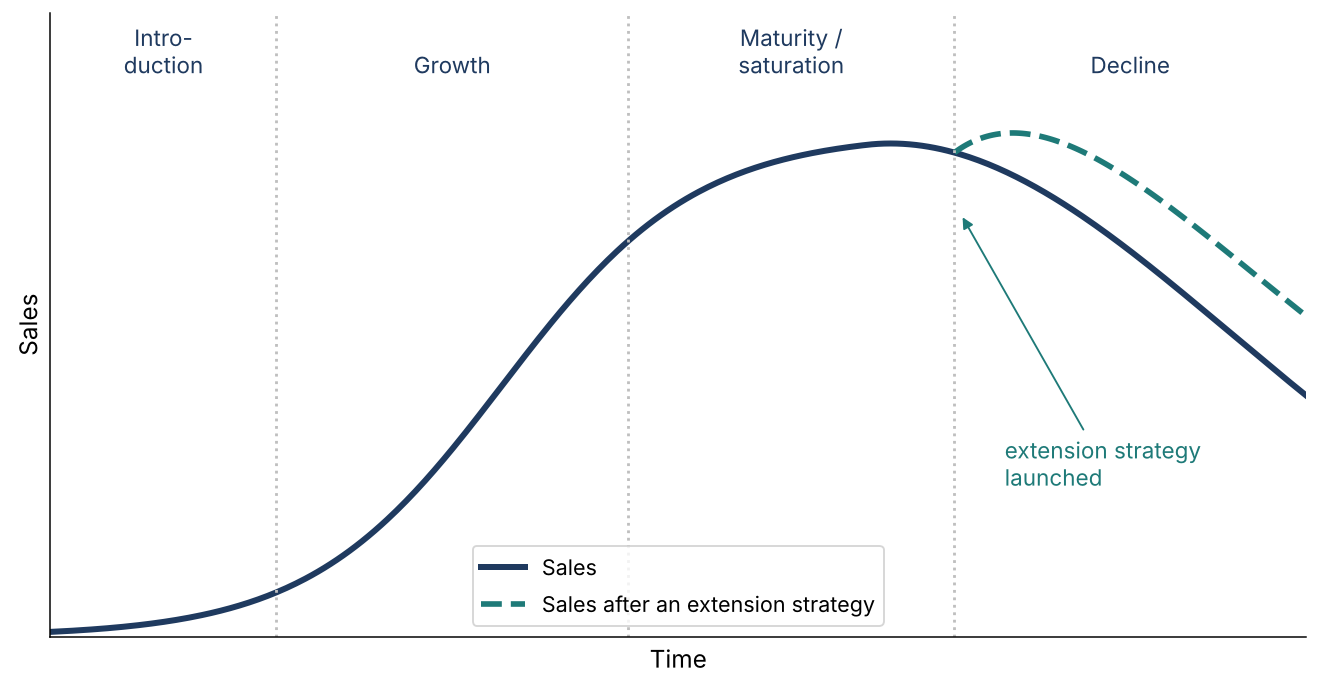
An extension strategy is an action taken to prolong a product's life cycle and delay decline.
| Stage | Sales and profit | Typical marketing mix |
|---|---|---|
| Introduction | Low sales; usually losses | Limited range; penetration or skimming price; heavy awareness promotion; selective distribution |
| Growth | Sales rising fast; profit appears | Add features and variants; competitive pricing; brand-building promotion; widen distribution |
| Maturity / saturation | Sales peak and level off; profit highest | Differentiate; defend share with competitive prices; reminder promotion; maximum distribution; extension strategies |
| Decline | Sales and profit fall | Cut costs; reduce range and promotion; selective distribution; harvest or withdraw |
In development and introduction, heavy investment (R&D, launch promotion, stock) produces negative cash flow and losses. In growth, profit appears but cash flow may stay tight because expansion needs more stock, capacity and promotion. In maturity, investment needs fall while sales are high, so profit and cash flow peak — this is the cash cow. In decline, profit and cash flow fall. The business therefore needs mature products to fund new ones: a portfolio of only new products is cash-starved; a portfolio of only mature ones has no future.
- New uses or new markets — selling the product to new segments or countries
- Product modification — new flavours, sizes, features, packaging or 'new improved' versions
- Repositioning and rebranding — changing the image to attract a different audience
- Price changes — targeted discounts to reach price-sensitive buyers
- New promotion or distribution — fresh campaigns, new channels such as online marketplaces
Extension strategies buy time, not immortality. They make sense when the product still has loyal customers and the extension costs less than developing a replacement; they waste money when decline reflects a lasting shift (technology or tastes) rather than fatigue. The PLC itself is a description, not a forecast — stages vary hugely in length, and managers can mistake a temporary dip for decline and abandon a product too early.
- 4.5.2 Branding
- 4.5.3 Price: pricing methods
- 4.5.4 Promotion
- 4.5.5 Place: distribution channels
- 4.5.6 People
- 4.5.7 Processes
- 4.5.8 Physical evidence
- 4.5.9 Appropriate marketing mixes
- Exam practice: 6 questions with mark allocations
- 2 exemplar answers with model answers and examiner-style commentary
- Where students commonly lose marks