Level: SL and HL. Sections marked HL only are for Higher Level students.
An exchange rate links one economy to the rest of the world. This topic explains how floating rates are set by demand and supply, what makes them change, the effects of a change, and how fixed and managed systems work.
An exchange rate is the price of one currency expressed in terms of another, for example ₹88 = US$1 or US$0.0114 per rupee.
A floating exchange rate is determined by the demand for and supply of the currency in the foreign exchange market, with no government or central bank intervention.
- Demand for rupees comes from foreigners who want to buy Indian exports (goods and services), invest in India (FDI and portfolio investment), send remittances to India, or speculate that the rupee will rise.
- Supply of rupees comes from Indian residents who want to buy imports, invest abroad, or send money abroad, all of which require selling rupees for foreign currency.
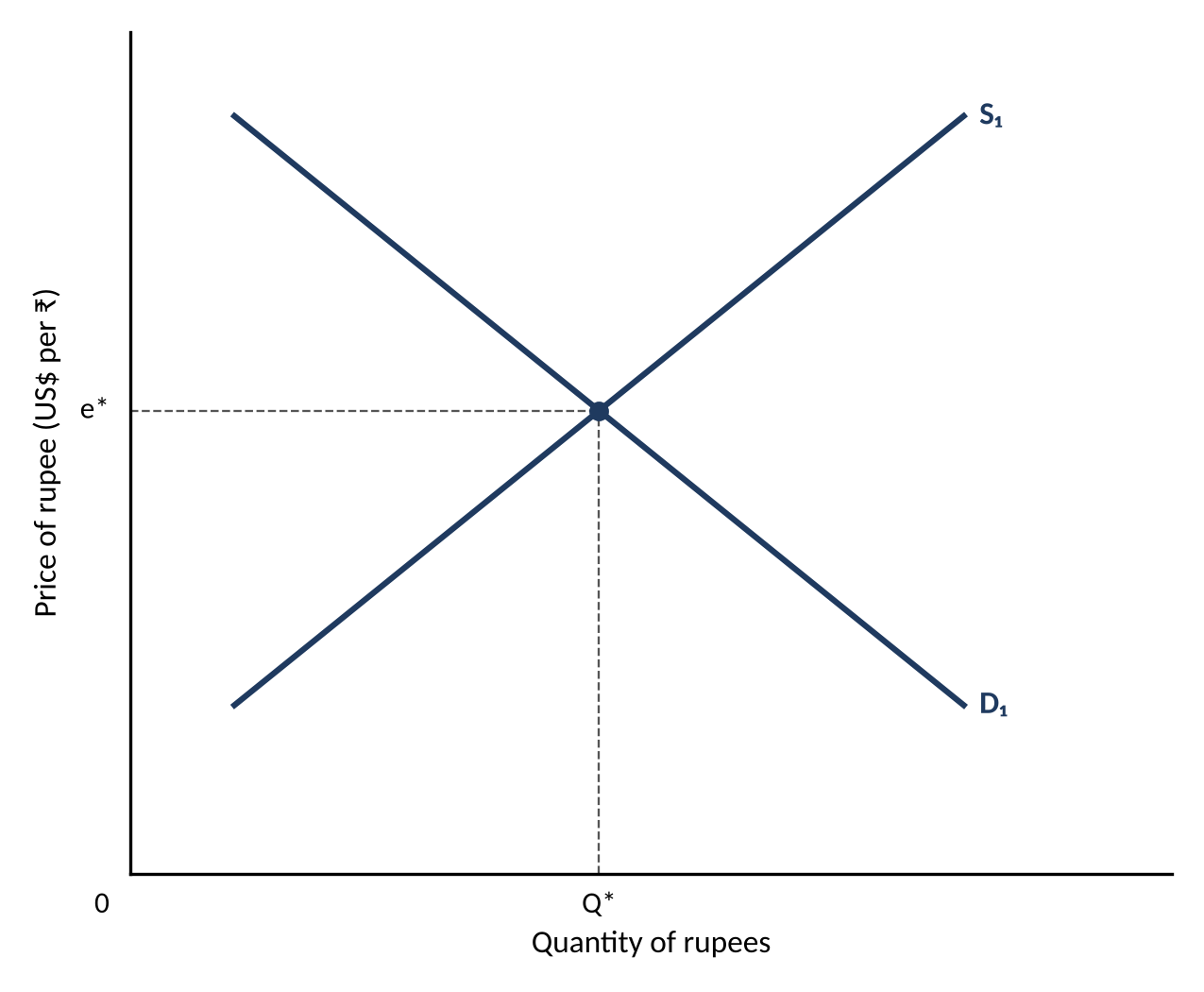
Appreciation is a rise in the value of a currency in a floating system; depreciation is a fall in the value of a currency in a floating system.
Task (SL and HL): The exchange rate changes from ₹80 = US$1 to ₹88 = US$1. (a) Calculate the
US$ price of a shirt priced at ₹1,600 before and after the change. (b) Calculate the percentage change in the value of the rupee and of the US dollar.
(a) Before: ₹1,600 ÷ 80 = US$20.00. After: ₹1,600 ÷ 88 = US$18.18. The shirt is cheaper for
Americans.
(b) Value of the rupee: from US$1 ÷ 80 = $0.0125 to US$1 ÷ 88 = $0.01136. Percentage change = (0.01136 − 0.0125) ÷ 0.0125 × 100 = −9.1% (the rupee depreciated).
Value of the dollar: from ₹80 to ₹88. Percentage change = (88 − 80) ÷ 80 × 100 = +10% (the dollar appreciated).
Note: the two percentages are not equal, because each is measured from a different base.
- 4.5.2 Factors that cause changes in exchange rates
- 4.5.3 Consequences of changes in exchange rates
- 4.5.4 Fixed exchange rates
- 4.5.5 Managed exchange rates
- 4.5.6 Fixed versus floating exchange rates (HL only)
- Exam practice: 5 questions with mark allocations
- 2 exemplar answers with full model answers and examiner commentary