Level: SL and HL
Why do some countries stay poor? This topic examines the poverty cycle and the economic, political and social barriers that hold back growth and development, and considers which barriers matter most.
The poverty cycle (poverty trap) is a situation in which low incomes lead to conditions that keep incomes low, so poverty continues from one generation to the next unless there is outside intervention.
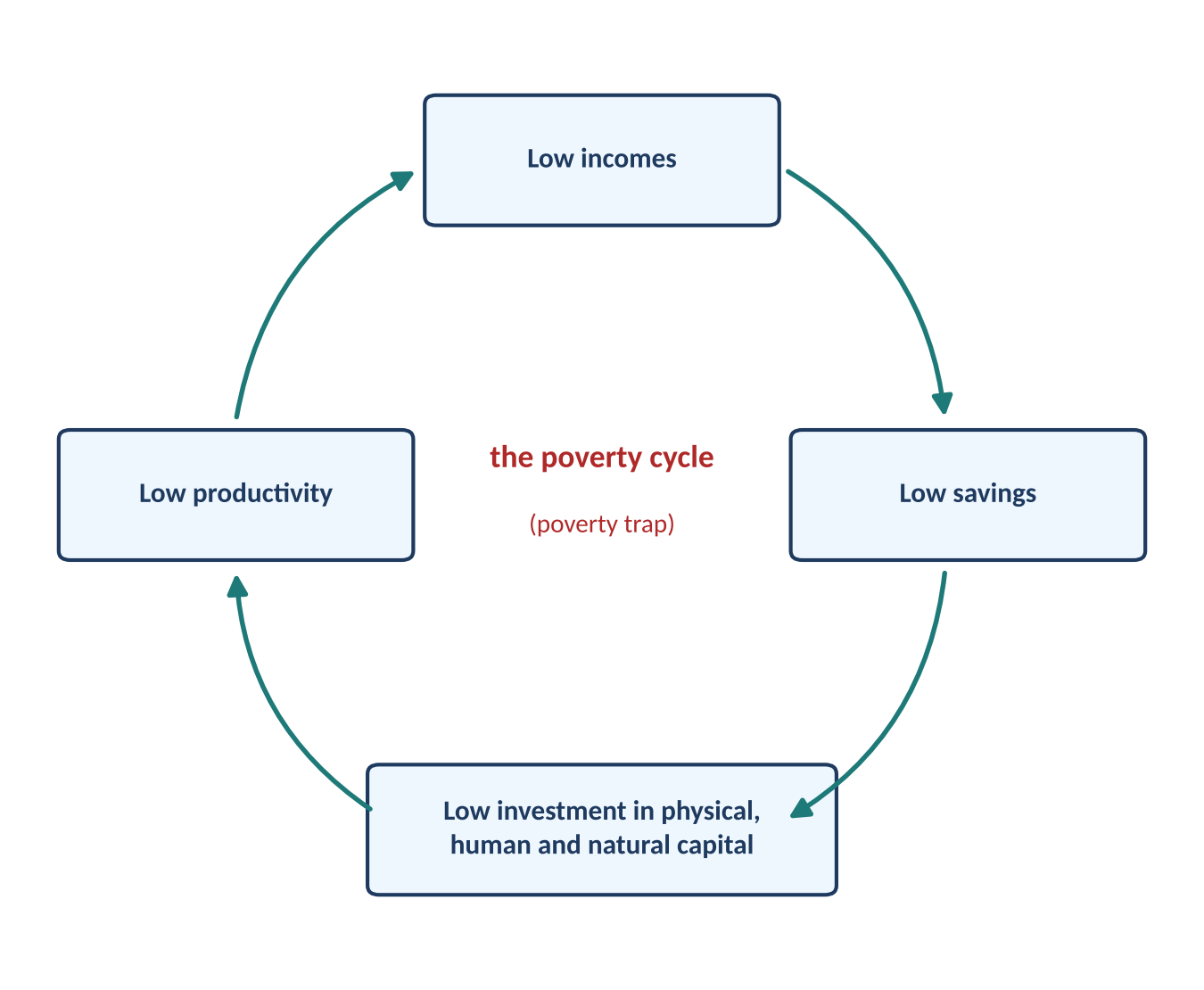
Low incomes → households spend almost all income on necessities, so savings are low → low savings mean little funding for investment in physical capital (machinery, infrastructure), human capital (education, health) and natural capital → low investment keeps productivity low → low productivity means low incomes → the cycle repeats.
The cycle can occur at the level of households, communities and whole countries. Breaking it requires an injection from outside the cycle, such as government spending, foreign aid, FDI, remittances or microcredit.
- 4.9.2 Economic barriers
- 4.9.3 Political and social barriers
- 4.9.4 The significance of different barriers
- Exam practice: 5 questions with mark allocations
- 2 exemplar answers with full model answers and examiner commentary