Level: SL and HL
Supply-side policies aim to raise an economy's productive capacity, so it can grow faster without inflation. Some rely on freeing markets; others on government investment.
3.7.1 Goals of supply-side policies
- Long-term growth by increasing the economy's productive capacity (shifting LRAS or Keynesian AS to the right).
- Improving competition and efficiency.
- Reducing labour costs and unemployment through more flexible labour markets.
- Reducing inflation to improve international competitiveness.
- Increasing firms' incentives to invest in innovation by reducing costs.
Definition
Supply-side policies are government policies that aim to increase aggregate supply by improving the quantity and quality of factors of production and the efficiency of markets.
Supply-side policies are government policies that aim to increase aggregate supply by improving the quantity and quality of factors of production and the efficiency of markets.
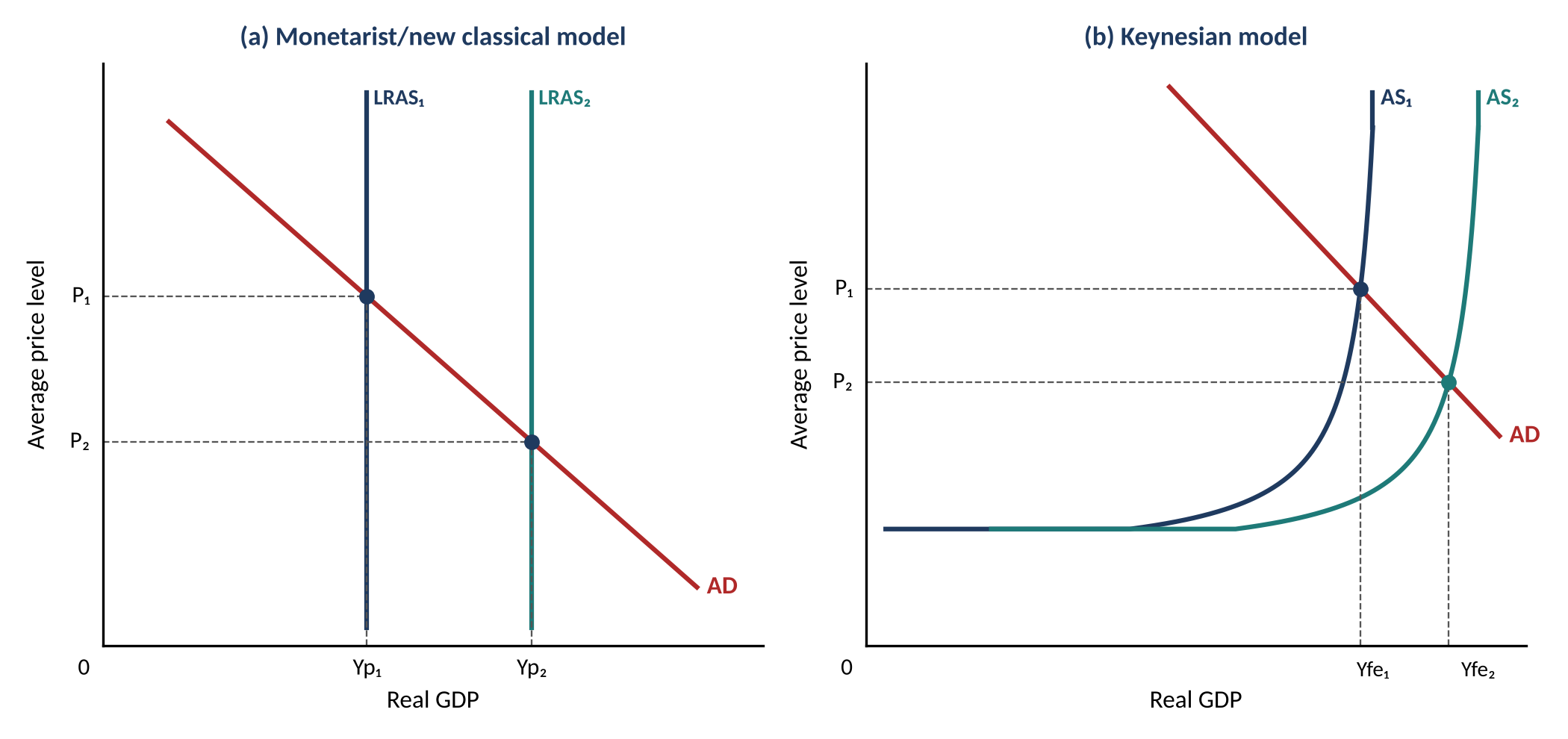
Figure 1: supply-side policies shift (a) LRAS and (b) Keynesian AS to the right, raising output and lowering the
price level
If supply-side policies succeed, real GDP rises and the price level is lower than it would otherwise be, so they help to avoid the conflict between growth and inflation.
🔒 Also in the full notes
- 3.7.2 Market-based supply-side policies
- 3.7.3 Interventionist supply-side policies
- 3.7.4 Demand-side effects of supply-side policies, and supply-side effects of fiscal policies
- 3.7.5 Effectiveness of supply-side policies
- Exam practice: 5 questions with mark allocations
- 2 exemplar answers with full model answers and examiner commentary