9.2.1 Difference between actual growth and potential growth in national output
Definition: Actual growth: an increase in real GDP (the output actually produced), often caused by higher AD using spare capacity. Potential growth: an increase in the productive capacity of the economy (the maximum output when all resources are fully and efficiently employed), caused by more or better factors of production.
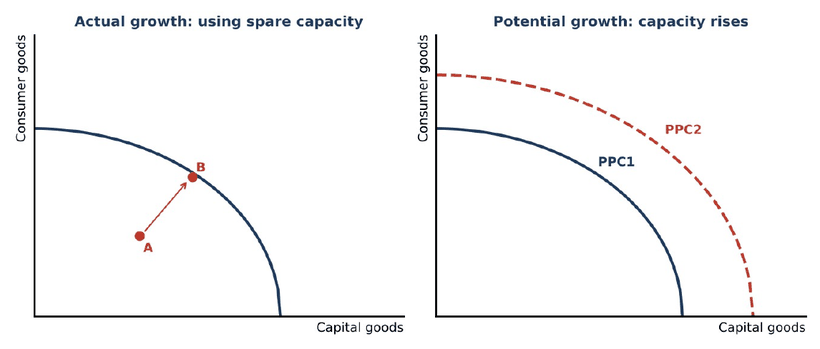
Figure: Actual growth (A to B) and potential growth (outward shift of the PPC)
On a PPC, actual growth is a movement from a point inside the curve towards it; potential growth is an outward shift of the curve. On an AD/AS diagram, actual growth is a rise in real output from higher AD; potential growth is a rightward shift of LRAS. Actual growth cannot exceed potential growth for long: once spare capacity is used up, further rises in AD cause inflation.
🔒 Also in the full notes
- 9.2.2 Output gaps
- 9.2.3 The business (trade) cycle
- 9.2.4 Policies to promote economic growth
- 9.2.5 Inclusive growth
- 9.2.6 Sustainable growth
- Exam practice: 4 practice questions
- 3 exemplar 20-mark essays with full model answers, mark breakdowns and common mistakes