Normal rain is slightly acidic, but pollution from power stations and vehicles can make it acidic enough to kill fish, damage forests and erode buildings. Because pollutants travel with the wind, acid rain is often an international problem.
4.3.1 The formation of acid rain
Definition Acid rain is precipitation (rain, snow or fog) that is more acidic than normal because it contains dissolved sulfur dioxide and oxides of nitrogen. Normal rain has a pH of about 5.6; acid rain has a lower pH.
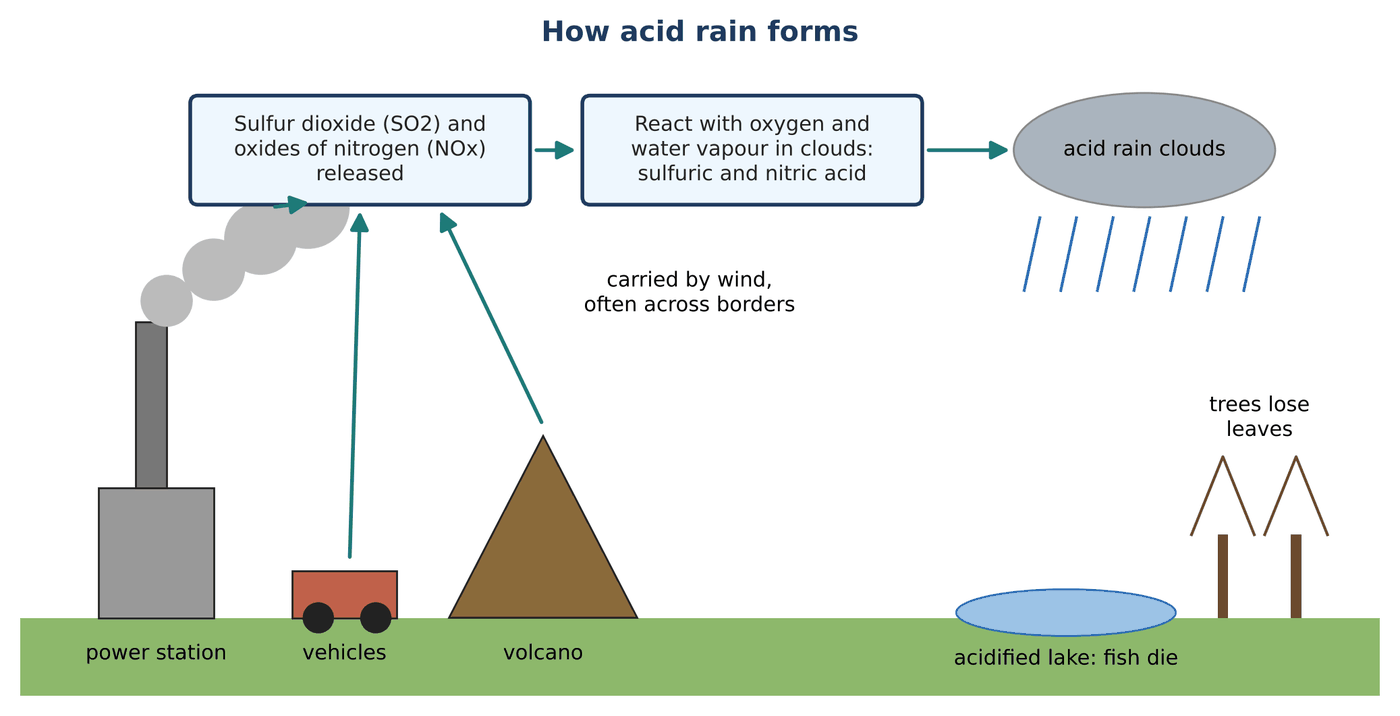
Figure 1: How acid rain forms and some of its impacts
- (a) Sulfur dioxide from combustion of fossil fuels which contain sulfur compounds. Coal and oil contain small amounts of sulfur. When they are burned in power stations, factories and ships, the sulfur reacts with oxygen to form sulfur dioxide (SO₂).
- (b) Sulfur dioxide from volcanic gases. Volcanic eruptions release sulfur dioxide naturally.
- (c) Oxides of nitrogen from vehicle engines. In the very high temperatures inside engines, nitrogen from the air reacts with oxygen, forming oxides of nitrogen (NOx). Power stations also produce them.
- (d) Formation of acid rain. Sulfur dioxide and oxides of nitrogen react with oxygen and water vapour in the atmosphere, forming sulfuric acid and nitric acid. These dissolve in cloud droplets and fall as acid rain.
The pollutants can be carried hundreds of kilometres by the wind before falling, so the country that suffers acid rain is often not the one that caused it.
Analysis chain
Coal burned in a power station → sulfur dioxide released from the chimney → carried by wind → reacts with oxygen and water vapour → sulfuric acid in clouds → acid rain falls on lakes and forests in another country
🔒 Also in the full notes
- 4.3.2 Impacts of acid rain
- 4.3.3 Strategies to manage the impacts of acid rain
- 4.3.4 Benefits and limitations of strategies to manage acid rain
- Exam practice: 7 practice questions
- 1 exemplar answer with a full model answer and mark breakdown
- Where students commonly lose marks