Level: SL and HL. Sections marked HL only are for Higher Level students.
Who reports to whom, who decides what, and why the shape of an organisation quietly determines how fast it can think.
Guiding question
How should a business organise its people when the world around it keeps changing?
Success criteria
- I can use the terminology of organisational structure accurately (delegation, span of control, hierarchy, chain of command, bureaucracy, centralisation, decentralisation, delayering, matrix structure)
- I can draw and interpret flat, tall, and product/function/region-based organisation charts
- I can evaluate the appropriateness of different structures when external factors change
- HL: I can analyse newer forms of organisation, including project-based structures and Charles Handy's Shamrock Organisation
2.2.1 Terminology of organisational structure
Definition Delegation — passing authority (though not final responsibility) for a task down to a subordinate. Span of control — the number of subordinates reporting directly to one manager. Levels of the hierarchy — the number of layers of authority from top to bottom of the organisation.
Chain of command — the formal route by which instructions and accountability flow through the hierarchy.
Bureaucracy — administration based on formal rules, procedures and paperwork; it brings consistency but can slow decisions.
Centralisation — decision-making authority concentrated at the top; decentralisation — authority dispersed to branches, divisions or local managers.
Delayering — removing one or more levels of the hierarchy, widening spans of control and cutting management costs.
Matrix structure — employees grouped simultaneously by function and by project/product, reporting to both a functional head and a project leader.
These terms move together: a tall hierarchy implies narrow spans and a long chain of command; delayering widens spans and forces more delegation; centralisation shortens the list of decision-makers but lengthens the queue of decisions waiting for them.
| Choice | Strengths | Weaknesses |
|---|---|---|
| Centralisation | Consistent decisions and branding; strong control; economies in purchasing | Slow response to local conditions; demotivates local managers |
| Decentralisation | Fast local decisions; develops and motivates managers; fits diverse markets | Inconsistency; duplication of roles; loss of top-level control |
| Delayering | Cuts management costs; speeds vertical communication; empowers staff | Wider spans may overload managers; lost promotion rungs; redundancy costs and fear |
| Matrix structure | Combines specialist and project focus; flexible; breaks department silos | Two bosses — divided loyalty, conflicting demands; meetings multiply |
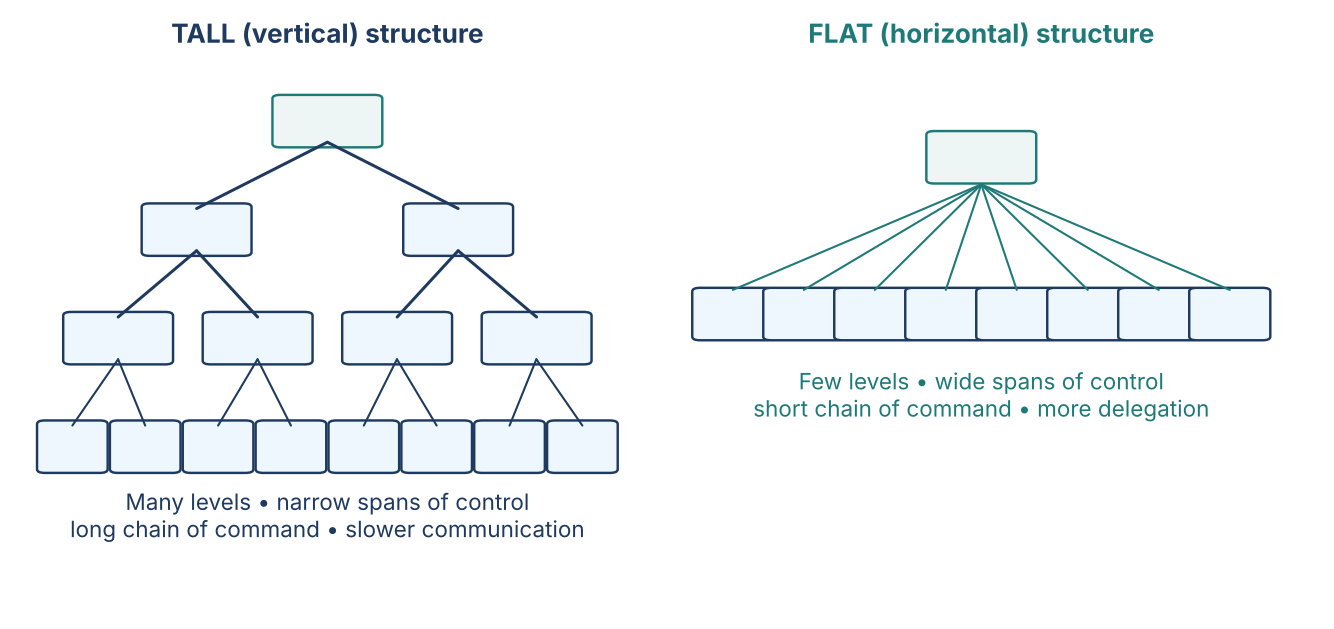
Figure 1: A matrix structure — functional columns crossed with project rows
🔒 Also in the full notes
- 2.2.2 Types of organisation charts
- 2.2.3 Appropriateness of different structures given a change in external factors
- 2.2.4 Changes in organisational structures (HL only)
- Exam practice: 5 questions with mark allocations
- 2 exemplar answers with model answers and examiner-style commentary
- Where students commonly lose marks